


As a gardener in my youth, I blundered through many a season only to learn what not to do. Luckily, I found a few gardening neighbors and some kind family members who offered sound advice that jump-started my garden success. Much of the reason for this weekly column is to help my garden friends reduce their blunder factor, which I found so frustrating early on.
Much of gardening is learned through trial and error, but why not learn from someone else? It costs less that way, right? Here are my top 7 mistakes made over the last couple of decades.
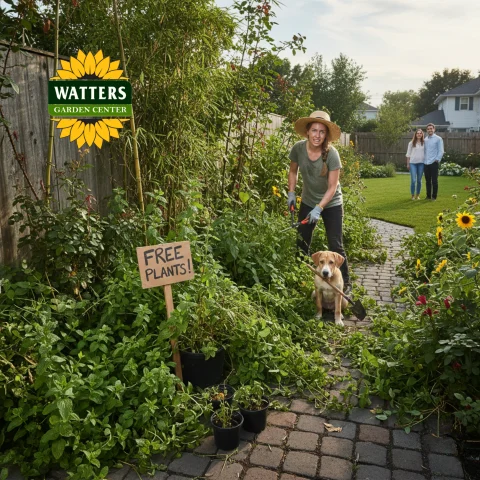
Mistake #1: Accept Free Plants
We’ve all done it. When you’re first starting your garden, the offer of free plants is too tempting. But it doesn’t take long to learn that free plants come with even more work than free puppies.
They don’t look so imposing when first tucked into the bed. As the old garden saying goes, “First year they sleep, second year they creep, third year they leap.” It doesn’t take long before you have free plants to give away yourself. And that is an even more egregious mistake than accepting them in the first place.





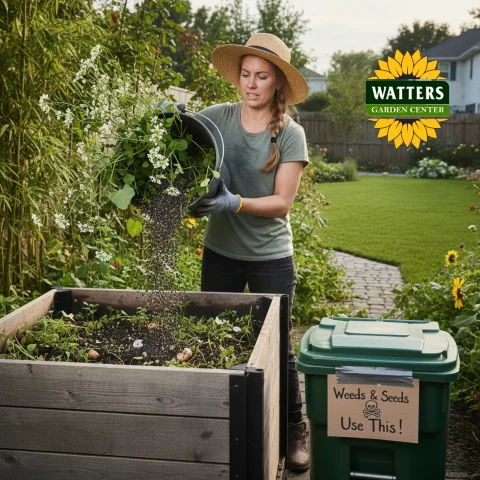
Mistake #2 Compost Weeds when in Flower
Ideally, we should pull weeds before they reach the flowering stage, but let’s be real. Weeds are masters of survival and bolt to seed with astonishing speed. The easiest thing to do is to toss them in the weed bucket and dump the whole thing in the compost pile.
If you think one or two flowering weeds aren’t going to cause a problem, keep in mind that a single garlic mustard plant, my nemesis at the moment, can produce over 600 seeds. A particularly vigorous weed can produce over 7000 seeds. That is a lot of future pulling. I opt for the garbage for all my weed and infected plants. Your compost pile is for vegetable scraps and plant trimmings, not for actively reseeding your garden!
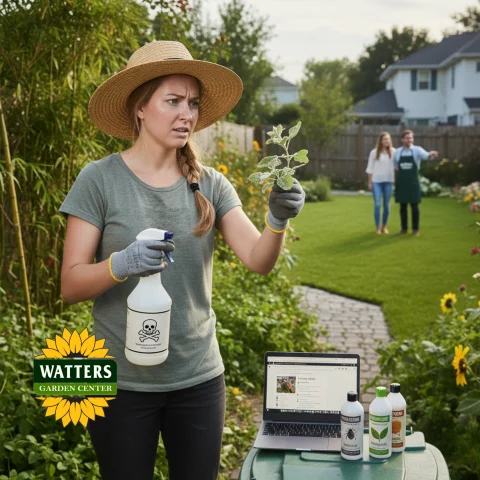
Mistake #3 – Reaching for the Spray
There are 2 things you should really try to ferret out before you spray. Will it work on your problem? Don’t laugh. Many people spray a fungicide on an insect or an insecticide on a diseased plant. When your red-tipped photinia has powdery mildew, no amount of bug spray will cure it. This requires that you know what the actual problem is. Do a little observation and investigation. Better yet, talk to one of the garden professionals here at Watters Garden Center. Bring in a sample if you are unsure!



Mistake #4: Ignore a Plant’s Likes & Dislikes
Whether it’s moisture levels, sun exposure, too much nearby competition, or poor soil quality, plants won’t thrive if asked to grow where they aren’t happy. One or two must-have special-needs plants are okay. Put them somewhere where you’ll remember to dote on each. But if you fill your garden with the wrong plants in the wrong place, you’re just asking for trouble. Here’s a list of my Top 10 Plants for the High Country.
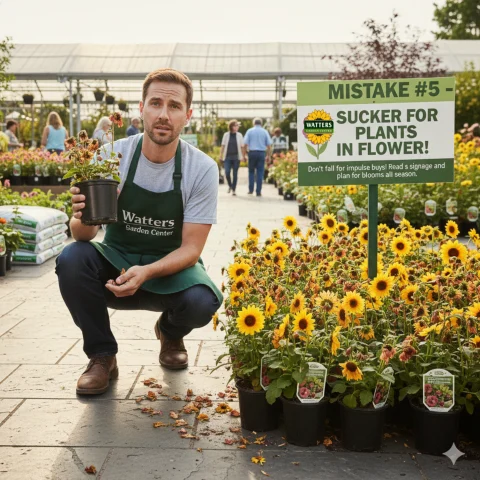
Mistake #5: Being a Sucker for Plants in Flower
We put the best impulse buys at the entrance when you walk into the garden center, or right next to the checkout lines. Gardeners are instantly hooked by their beauty. Most of these plants are already at their peak and by the time you get them home, their beauty begins to fade. Of course, if it’s a plant you really want, and you’re willing to wait until next year to see it bloom again, this is fine.
Some plants at the garden center have not had enough time to grow and look their best. Some are late bloomers, but they are fabulous when they do. You want a good mix of plants for the entire season. Go easy on the impulse buys and spend more time reading the Signage.
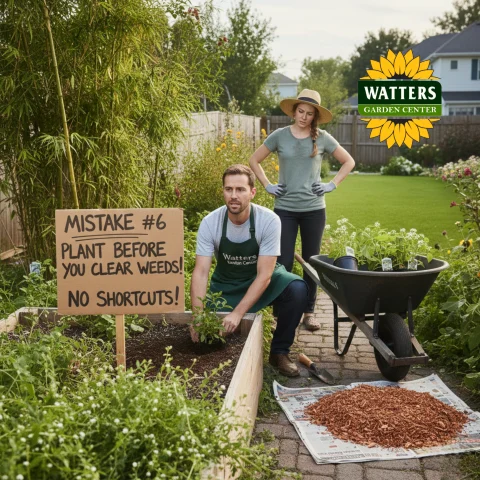
Mistake #6: Plant Before You Clear the Weeds
This is a huge no-no, yet impatient gardeners do it all the time. You plant, then come back later to do a thorough clean-up. In the meantime, the weeds get worse, flower, and go to seed. You play catch for the rest of the summer. If you are really tight on time or ambition, consider putting down newspaper covered with shredded cedar bark to smother weeds. Your garden will look so much better, too.


Mistake #7 – Divot Planting
Burying new plants in a deep hole or divot. The myth is that a plant in a hole will collect rainwater and help it get established; this is all wrong. Plants should be at garden level or just above for optimal soil drainage. August rains and March snows collect so much moisture that new plants can drown if planted at soil levels below normal. Here is a guide to proper planting that works.
A garden friend more experienced than I once told me, “If you weren’t killing a few plants along the way, you were missing out on some great garden lessons.” Well, I’ve sure had my share of lessons. I still like to try new plants. I’ve learned to depend on a handful of plants as my proven performers, plants that take some pressure off and let me sit back and enjoy. I hope you have a stable of proven performers for your garden, too.
Do you have a question about a mistake you made this season, or need help identifying a problem plant? I’m happy to offer some tailored advice.

Spring Garden Classes begin in January
The season ahead is exciting. We have a new series of Garden Classes free to fans of this column. Here’s the roster of exciting classes starting in January. We go deep into growing better. Check out this spring’s entire class selection offered every Saturday @ 9:30 am
January 10 – Happy Healthy Houseplants with Professional Style
January 17 – Don’t Just Plant – Grow! A Beginner’s Guide to Success
January 24 – Why January is the Month to Plant Wildflowers
Until next issue, I’ll be helping local gardeners make fewer mistakes here at Watters Garden Center.