



The choice of a front door lock is a foundational security decision for any home. It hinges on a clear understanding of different lock types and their specific operational mechanisms. Making an informed selection does more than secure a doorway; it establishes a robust defensive foundation for the entire property.
To support this important decision, our experts have created this guide. We will examine the core principles that separate adequate locks from truly effective ones.
Ultimately, installing quality strong locks is a fundamental requirement, not a mere upgrade, for ensuring your home’s primary layer of defense is both reliable and effective against potential threats.
Different Types of Front Door Locks
The selection of an appropriate front door lock demands an awareness of the full spectrum of choices. These options, spanning from traditional deadbolts to modern digital systems, vary immensely in their design, mechanism, and security provision. We will now examine the most common and effective types.
Deadbolt Locks
A deadbolt lock provides a primary defense for a home due to its exceptional resistance to forced entry. This resistance stems from its core mechanism; unlike a spring-latch that can be slipped with a credit card, the deadbolt requires a physical turn to operate.






As a widely regarded security staple, it serves as a fundamental component of any thorough security system. Professionals install it to complement the primary handle lock. Furthermore, consumers can select from three main configurations, and each design provides its own unique benefits.
Single Cylinder Deadbolt
For doors without adjacent glass, the single cylinder deadbolt is a perfect and common choice. Its design incorporates a keyed exterior and a thumb-turn interior.
This arrangement provides a strong mix of security and convenience, the latter being critical for a quick emergency exit. The prevalence of this model means you will find it in most residential homes.
Double Cylinder Deadbolt
For a door with adjacent glass, the double cylinder deadbolt is a strategic security choice, as it requires a key to operate from both sides. This feature effectively prevents unauthorized entry through a broken window. This very feature, however, creates a pivotal safety trade-off.
Individuals inside the home must have a key readily available to unlock the door during emergencies such as a fire. The significant danger associated with this requirement leads many local authorities to prohibit the residential use of these locks.






Vertical Deadbolt
In physical security, the orientation of a locking bolt critically determines its vulnerability to prying. The vertical deadbolt excels in this regard by moving its bolt on a perpendicular axis to standard locks.
This strategic direction channels any external prying force away from the weaker strike plate and into the main body of the door jamb. Consequently, this design transforms a straightforward prying action into a structurally complex and often futile endeavor for an attacker.
Smart Locks
Smart locks represent a modernization of home security through the integration of digital access systems and physical hardware. These devices provide global remote control directly from a smartphone. Users can lock or unlock a door via a mobile application, a voice command to a smart home assistant, or automated schedules.
The system facilitates keyless entry, a feature that eliminates physical keys. It also allows for the assignment of temporary or scheduled access codes. Remote access functionality enables a user to verify the door’s status and lock it from any location.
Furthermore, many models integrate with broader smart home ecosystems, enabling automated routines such as activating lights upon entry. These locks operate on battery power, requiring users to monitor power levels to prevent lockouts.
As internet-connected devices, they also demand robust cybersecurity practices. Selecting models with advanced encryption and consistently maintaining current software are critical steps for ensuring ongoing security.
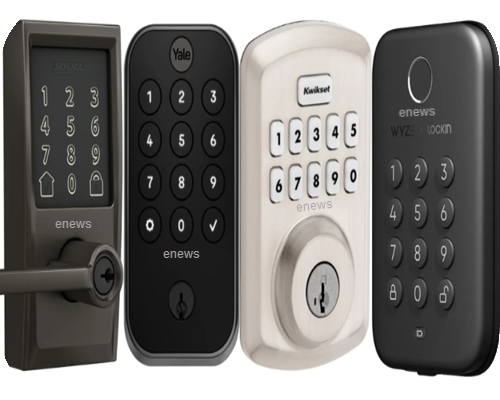
Keypad Locks
Keypad locks provide keyless entry while maintaining the physical integrity of a deadbolt. Access is granted through a numeric code on an electronic keypad, a process that replaces physical keys.
The system permits the creation of multiple unique codes for different users. One can add, change, or delete these codes without rekeying the lock, a feature that facilitates straightforward access management.


As battery-powered units, they necessitate regular checks for power levels. The security of these locks depends on code confidentiality, and factors like visible wear or shared codes can create vulnerabilities.
High-Security Locks
As top-tier mechanisms that often bear ANSI Grade 1 certification, high-security locks offer a superior level of resistance to tampering methods such as picking, drilling, and prying. They are specifically designed to provide the highest level of protection for residential properties, and they deliver this same maximum security for commercial properties.
Their enhanced performance stems from several distinct features:
- Hardened Steel Components: Critical internal parts, including bolts and cylinders, use hardened steel to defeat physical attacks.
- Pick-Resistant Cylinders: Proprietary keyways with complex designs prevent unauthorized key duplication and make picking extremely difficult.
- ANSI/BHMA Grading: The American National Standards Institute provides a security and durability rating, with Grade 1 representing the highest commercial-grade security.
These locks require professional installation to guarantee proper function with your door. This enhanced security results in a significantly higher product and installation cost.
So Which Lock Is Right for You?
The most suitable front door lock depends entirely on individual security objectives and lifestyle. Users who prioritize keyless entry and modern features will find that smart locks or keypad models serve their needs. A single or vertical deadbolt provides excellent, robust protection for traditional security applications.
For the highest level of tamper resistance, an ANSI Grade 1 high-security lock is the definitive solution. Many security professionals recommend a combined approach for all-encompassing defense. Pairing a high-security deadbolt with a smart or keypad mechanism ensures both peak physical fortification and modern, convenient access.