

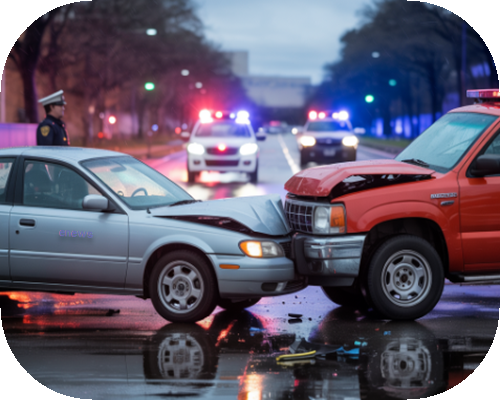
Image Source: Ideogram.io
Car accidents happen in the blink of an eye, but determining who’s responsible can take weeks, months, or even years.
Understanding liability is crucial for protecting your financial interests and ensuring fair compensation for damages and injuries.
Understanding Legal Liability in Motor Vehicle Accidents
Liability refers to legal responsibility for damages caused by negligent or wrongful actions. In car accidents, liability determines who must pay for vehicle repairs, medical expenses, lost wages, and other costs resulting from the collision.






“Most states follow a fault-based system, meaning the driver who caused the accident bears financial responsibility. However, some states operate under no-fault insurance laws, where each driver’s insurance covers their own expenses regardless of who caused the crash,” says Morris Injury Law, a renowned Reno Car Accident Lawyer.
The determination of fault involves examining evidence, witness statements, police reports, and traffic laws. Insurance companies, law enforcement, and sometimes courts work together to establish which party or parties bear responsibility for the accident.
The Role of Negligence in Determining Fault
Negligence forms the foundation of most car accident liability cases. A driver is considered negligent when they fail to exercise reasonable care, resulting in harm to others on the road.
Common examples of negligent driving include speeding, running red lights, texting while driving, following too closely, or driving under the influence. These behaviors demonstrate a failure to operate a vehicle safely and responsibly.





To prove negligence, four elements must be established: duty of care, breach of that duty, causation, and damages. Every driver has a duty to operate their vehicle safely, and violating this duty can result in liability for resulting accidents.
Primary Driver Liability Scenarios
The most straightforward liability situation involves one driver clearly causing an accident through negligent behavior. This might include rear-ending another vehicle, running a stop sign, or making an illegal turn that results in a collision.
In these cases, the at-fault driver’s insurance typically covers damages for all parties involved. The negligent driver may face increased insurance premiums, traffic citations, and potential lawsuits if damages exceed their coverage limits.
However, even seemingly clear-cut cases can become complicated when factors like road conditions, vehicle malfunctions, or other drivers’ actions contribute to the accident’s severity or occurrence.
Shared Fault and Comparative Negligence
Many accidents involve multiple parties sharing responsibility for the collision. States handle shared fault situations differently, using either comparative negligence or contributory negligence principles to assign liability percentages.
Under comparative negligence, damages are reduced based on each party’s percentage of fault. For example, if you’re found 30 percent responsible for an accident, you can still recover 70 percent of your damages from the other driver.


Pure comparative negligence allows recovery even if you’re mostly at fault, while modified comparative negligence bars recovery if you’re more than 50 or 51 percent responsible, depending on state law.
When Insurance Companies Bear Responsibility
Insurance companies play a crucial role in accident liability, as they’re contractually obligated to defend and compensate their policyholders for covered incidents within policy limits.
If a driver causes an accident, their liability insurance should cover the other party’s damages up to the policy limits. However, if damages exceed these limits, the at-fault driver remains personally responsible for the additional costs.
Uninsured and underinsured motorist coverage protects drivers when they’re hit by someone without adequate insurance. This coverage allows victims to seek compensation from their own insurance company when the at-fault driver cannot pay.
Third-Party Liability Considerations
Sometimes liability extends beyond the drivers directly involved in the accident. Employers may be responsible for accidents caused by employees driving company vehicles or conducting business-related activities.
Vehicle manufacturers can face liability if defective parts or design flaws contribute to accidents. Similarly, government entities may be responsible for accidents caused by poorly maintained roads, inadequate signage, or dangerous traffic patterns.
Bars and restaurants may face liability under dram shop laws if they serve alcohol to visibly intoxicated patrons who later cause accidents. These laws vary significantly by state but can create additional avenues for compensation.
The Investigation Process and Evidence Collection
Determining liability requires thorough investigation and evidence collection. Police reports provide official documentation of the accident scene, though they’re not always definitive in establishing fault.
Witness statements, photographs, video footage, and accident reconstruction experts can help clarify what happened and who bears responsibility. Modern technology, including dashcams and smartphone apps, increasingly provides valuable evidence in liability determinations.
Insurance adjusters conduct their own investigations, interviewing parties involved, reviewing medical records, and assessing property damage. Their findings significantly influence settlement negotiations and liability determinations.
Steps to Take Immediately After an Accident
Taking the right actions immediately following an accident can significantly impact liability determinations and protect your interests. First, ensure everyone’s safety by moving vehicles out of traffic if possible and calling emergency services for injuries.
Document everything at the scene by taking photographs of vehicle damage, road conditions, traffic signs, and the accident location. Exchange insurance information with all parties involved and collect contact details from witnesses who saw the accident occur.
Avoid admitting fault or making statements about what happened beyond basic facts. Even seemingly innocent comments like “I’m sorry” can be interpreted as admissions of guilt. Let the investigation process determine liability based on evidence rather than immediate reactions.
Report the accident to your insurance company as soon as possible, even if you believe you weren’t at fault. Delays in reporting can complicate claims processing and may violate your policy terms and conditions.
Legal Representation and Protecting Your Interests
While insurance companies handle many liability determinations, having legal representation can be crucial, especially in complex cases or when significant damages are involved. Attorneys understand how to gather evidence, negotiate with insurance companies, and protect your rights.
Legal counsel becomes particularly important when fault is disputed, multiple parties are involved, or insurance coverage is inadequate. Experienced attorneys can identify all potential sources of compensation and ensure you receive fair treatment throughout the process.
Many personal injury attorneys work on contingency fees, meaning they only get paid if you recover compensation. This arrangement makes legal representation accessible even when you’re facing medical bills and lost income from the accident.
Conclusion
Understanding car accident liability involves navigating complex legal principles, insurance policies, and state-specific laws. While some accidents have clear-cut liability, many involve shared responsibility requiring careful investigation and analysis.
The key to protecting yourself lies in maintaining adequate insurance coverage, driving responsibly, and seeking appropriate legal guidance when accidents occur. Remember that liability determinations can significantly impact your financial future, making it essential to understand your rights and responsibilities as a driver.