


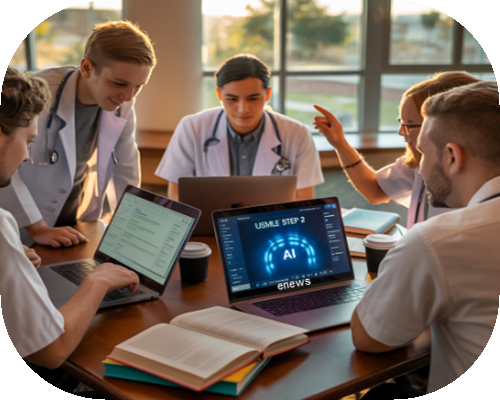
Forget late-night cram sessions fueled by endless cups of coffee and towering textbooks. The new generation of medical students in Arizona is studying with a secret weapon that feels like it’s straight out of science fiction: artificial intelligence. And they’re using it to tackle one of the most daunting challenges of their careers—the USMLE Step 2. Arizona’s diverse medical schools share one goal: conquering licensing exams for a top residency. Today, they’re achieving it with a major tech upgrade.
So, what’s the big deal with Step 2?
Think of Step 1 as memorizing a car’s engine. Step 2 is diagnosing a weird noise while driving in a blizzard. This shift to clinical application is where AI becomes a game-changer.
Your AI Study Buddy Is Here
Imagine a tutor that never sleeps, has instant access to every medical textbook and case study ever written, and can generate infinite, board-style practice questions tailored specifically to your weaknesses. That’s the power of the AI-powered platforms that Arizona med students are now using.






Gone are the days of one-size-fits-all question banks. Now, if a student consistently trips up on cardiology concepts like heart murmurs or pediatric conditions like Kawasaki disease, the AI algorithm detects this pattern. It then curates a custom study session filled with cardiology and pediatric cases, ensuring they drill their weak spots until they become strengths. It’s like having a personal coach who knows you better than you know yourself.
Arizona’s Tech-Forward Ecosystem: The Perfect Testing Ground
This isn’t happening in a vacuum. Arizona has rapidly become a hub for educational technology and innovation. Our medical schools are designed not just with state-of-the-art simulation labs—where students practice on high-fidelity mannequins that breathe, bleed, and react—but also with the digital infrastructure to support next-gen learning.
This forward-thinking environment makes Arizona the perfect place to integrate AI into medical education. Students train on advanced technology in the classroom and then use advanced technology to study, creating a seamless feedback loop of high-tech preparation. Whether they’re in a program focused on groundbreaking research or one centered on whole-person care, these tools are universally applicable, sharpening the clinical reasoning skills that every physician needs.
From Virtual Patients To Real-World Confidence






The culmination of all this tech? Unshakable confidence. By the time exam day rolls around, an Arizona med student has already diagnosed thousands of virtual patients. The AI has thrown them every curveball imaginable, from rare zebra diseases to classic case presentations.
This does more than just prepare them for a test; it prepares them for their residencies and careers. They’re learning not just what the right answer is, but how to think. They’re entering the testing center (and eventually, the hospital) with a deep, practiced clinical intuition.
Conclusion:
So, while the journey to becoming a doctor is still incredibly tough, Arizona’s students are pioneering a smarter way to get there. They’re leveraging the power of AI to ensure they’re not just test-takers, but truly excellent, well-prepared physicians ready for whatever comes next. The future of medicine is bright, and it’s being programmed right here in the Grand Canyon State.