


When people wanted to find commercial real estate in Nevada twenty years ago, the conversation started and ended with Las Vegas. The Strip, downtown casinos, maybe some office buildings if you were feeling adventurous. That was it.
Not anymore.
I’ve been working in Nevada commercial real estate since 2003, and the change I’ve witnessed over the past decade has been nothing short of remarkable. Sure, Vegas is still the big dog, but I’m spending more and more of my time in places like Reno, Henderson, and even smaller communities that most people couldn’t find on a map five years ago.
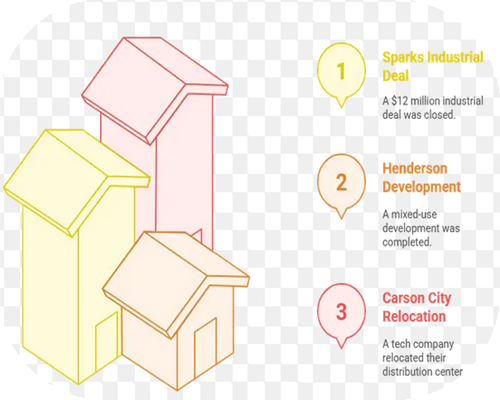
Last month, I closed a $12 million industrial deal in Sparks. The month before, it was a mixed-use development in Henderson. Three months ago, I was helping a California tech company relocate their distribution center to a business park outside Carson City that didn’t even exist when I started in this business.
This isn’t just about growth – it’s about Nevada finally becoming what we always said it could be: a diverse, dynamic commercial real estate market that doesn’t rise and fall with casino revenues and convention bookings.






Beyond the Strip: Identifying Nevada’s Emerging Commercial Property Markets
Here’s what’s happening that most people don’t realize: Nevada has quietly built itself into one of the best logistics and industrial hubs in the western United States.
Reno-Sparks is the poster child for this transformation. I remember when that area was basically just casinos and retirement communities. Now? It’s an industrial powerhouse. Tesla’s Gigafactory was just the beginning. Amazon has massive facilities there. So does Walmart, FedEx, and dozens of other major distributors who figured out what locals have known for years – you can reach 60% of the U.S. population in two days of trucking from Northern Nevada.
Henderson is having its own moment, but in a completely different way. It’s evolved from a sleepy bedroom community into a legitimate business destination. The healthcare sector is booming there, along with professional services and tech companies that want to be near Vegas but don’t want to deal with Strip traffic and tourist crowds.
Even smaller markets are getting interesting. I just listed a 50,000-square-foot warehouse in Fallon that had five serious offers within a week. Fallon! Ten years ago, I couldn’t give away commercial space in Fallon.
The common thread? These markets offer what businesses actually need: affordable land, good highway access, reasonable labor costs, and a state government that actually wants them there.






What’s Driving the Growth? Understanding the Catalysts
The catalyst everyone talks about is the California exodus, and that’s certainly real. I’ve personally helped relocate probably two dozen California businesses over the past three years. The savings are just too big to ignore.
But the real story is more complex than businesses fleeing high taxes. Nevada has spent the last fifteen years systematically building the infrastructure needed to compete for major industrial and logistics operations. The highway improvements alone have been game-changing. I-80 and I-15 aren’t just better roads – they’re economic lifelines that connect Nevada to major population centers.
The pandemic accelerated everything. Remote work made location less important for many businesses, so why pay California real estate prices when you can get twice the space for half the cost in Nevada? I had one client tell me his company’s lease in Orange County was costing them $32 per square foot. We found them a better facility in Reno for $8 per square foot. The math isn’t complicated.
State incentives matter too, but they’re not the whole story. Yes, Nevada offers tax breaks and development incentives, but so do a lot of states. What Nevada offers that’s harder to quantify is speed. I can get a client through the permitting process here in months, not years. That’s worth real money to businesses trying to expand or relocate quickly.
The demographic shifts are driving residential demand, which creates demand for retail and service businesses, which creates demand for office space. It’s a virtuous cycle that keeps feeding on itself.
Types of Properties in Demand in Emerging Nevada Markets
Industrial real estate is absolutely on fire right now. I can’t keep up with demand for warehouse and distribution space, especially in Northern Nevada. Class A industrial buildings are leasing as fast as we can build them.
The sweet spot seems to be 100,000 to 500,000 square feet with good highway access and room for truck traffic. I just had a 200,000-square-foot facility in Reno lease before we even finished construction. The tenant was a California-based e-commerce company that needed western distribution but couldn’t afford Bay Area real estate prices.
Multi-family is the other hot sector, but it’s more scattered geographically. Henderson is seeing a lot of apartment development to accommodate the growing workforce. Reno has good fundamentals with the university and growing job base. Even smaller markets like Carson City are seeing apartment construction for the first time in years.


Office space is trickier. We’re seeing demand for smaller, flexible spaces rather than big corporate campuses. A lot of the companies relocating from California are bringing remote-work cultures with them, so they need less space per employee but they want nicer space.
Retail follows rooftops, so wherever we’re seeing residential growth, retail demand follows. But it’s not traditional big-box retail – it’s more experiential retail, restaurants, and service businesses that can’t be delivered by Amazon.
Opportunities and Considerations for Investors
The opportunities are real, but you can’t just throw money at Nevada real estate and expect it to work. I’ve seen investors from California and Texas come in thinking they can apply the same strategies that worked in their home markets. Some succeed, many don’t.
The key is understanding that these aren’t just smaller versions of major markets. They have their own dynamics, their own demand drivers, their own challenges.
Take industrial real estate in Northern Nevada. Yes, demand is strong, but you better understand the utility situation before you buy land. Power availability can be an issue in some areas. Water rights matter more than most people realize. The permitting process is faster than California, but it’s not automatic.
Multi-family investing requires understanding local employment patterns. A lot of the job growth is in sectors that might be cyclical. Construction workers, logistics employees, service sector jobs tied to population growth – these can be good tenants, but you need to understand the economic base.
I always tell investors to spend time in the market before they invest. Drive around. Talk to local brokers. Understand the traffic patterns, the development pipeline, the political climate. A deal that looks great on paper might be in the path of a planned highway expansion that will kill retail traffic, or in an area where the local government is hostile to new development.
The yields can be attractive compared to established markets, but higher yields usually mean higher risk. Make sure you understand what you’re taking on.
My Perspective: Navigating the New Landscape
The Nevada I work in today is fundamentally different from the Nevada I started working in twenty years ago. Back then, everything revolved around gaming and tourism. Economic development meant getting another casino to build in your town.
Now we have genuine economic diversity. Tesla didn’t choose Nevada for the gambling – they chose it for the lithium deposits, the land availability, the logistics advantages, and the business climate. That’s a completely different value proposition.
What I find most exciting is working with businesses that are building something new rather than just relocating something old. I recently helped a startup renewable energy company find land for a battery manufacturing facility. Five years ago, that conversation wouldn’t have happened in Nevada.
The challenge is that success brings its own problems. Land prices are rising fast in the best locations. Traffic is getting worse in Reno. Housing costs are climbing in Henderson. We’re starting to see some of the same pressures that drove businesses out of other markets.
But we’re also seeing innovation in how deals get structured and financed. More public-private partnerships, more creative use of tax increment financing, more willingness to think outside traditional development models.
The key to navigating this market is staying local. National trends matter, but the real opportunities are in understanding micro-markets and demographic shifts that might not show up in the big data reports until it’s too late to capitalize on them.
Conclusion: The Future of Nevada Commercial Real Estate
I’m more optimistic about Nevada commercial real estate than I’ve ever been, but it’s a different kind of optimism than I had twenty years ago.
Back then, optimism meant hoping the next recession wouldn’t kill the tourism industry. Now it means watching a genuinely diversified economy create sustainable demand for all kinds of commercial real estate.
The growth in Northern Nevada, Henderson, and emerging markets throughout the state isn’t just a reaction to problems in other states. It’s Nevada finally capitalizing on advantages we’ve had all along: location, business climate, available land, and a government that wants to make deals happen.
Will every emerging market succeed? No. Will every investment opportunity pan out? Definitely not. But the fundamentals are solid in a way they’ve never been before.
Five years from now, I predict we’ll be talking about Nevada markets that aren’t even on most investors’ radar today. The infrastructure is in place, the business climate is favorable, and the demographics are moving in the right direction.
For investors and businesses willing to do their homework and think long-term, Nevada’s commercial real estate expansion beyond Las Vegas represents the kind of opportunity that doesn’t come along very often. The key is getting involved while there’s still room to grow.