


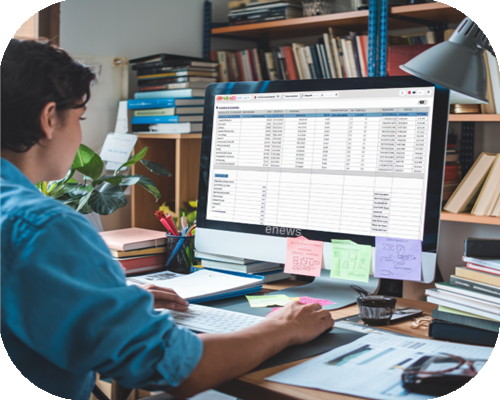
For decades, spreadsheets have been the go-to tool for small businesses and startups managing their financial data. Their flexibility, familiarity, and low cost made them indispensable in the early stages of business growth. But as companies scale, so do their financial complexities—and that’s where spreadsheets begin to show their cracks. Increasingly, modern businesses are shifting away from traditional spreadsheets and moving toward integrated accounting systems to streamline operations, minimize risk, and support informed decision-making.
This shift isn’t just a trend—it’s a strategic upgrade that reflects the demands of today’s fast-paced and interconnected business environment.
The Limitations of Spreadsheets
Spreadsheets like Excel or Google Sheets are great for quick calculations, data analysis, and reporting. However, they come with significant limitations when it comes to managing the end-to-end financial needs of a growing organization.
- Human Error:
One misplaced decimal or forgotten formula can throw off entire reports. According to studies, nearly 90% of spreadsheets contain errors. These mistakes might seem small, but in a financial context, they can lead to costly misjudgments.






- Lack of Real-Time Data:
Spreadsheets are static. Even with shared cloud versions, they often lag behind in reflecting real-time business activity. That delay in data accuracy can hinder timely decisions, particularly in fast-moving industries.
- Scalability Issues:
As a business grows, so do the number of transactions, financial accounts, and compliance obligations. Spreadsheets become increasingly cumbersome, harder to manage, and more prone to breaking down under pressure.
- Limited Collaboration:
While cloud spreadsheets offer some level of collaboration, version control, user permissions, and data tracking remain major issues. One person’s changes can overwrite another’s, leading to confusion and inefficiency.
The Rise of Integrated Accounting Systems
To address these pain points, businesses are turning to integrated accounting systems—cloud-based platforms that centralize and automate core financial processes. These systems go beyond basic bookkeeping to connect all aspects of financial management, including general ledger, accounts payable and receivable, tax compliance, payroll, and reporting.






What Makes These Systems So Valuable?
- Automation of Repetitive Tasks:
Modern accounting platforms can automatically generate invoices, reconcile bank accounts, and track expenses. This not only saves time but also reduces the chance of human error.
- Real-Time Financial Insights:
With integrated systems, business owners and finance teams can access up-to-date dashboards, financial reports, and forecasts. Decisions are no longer based on outdated numbers from last month—they’re driven by accurate, live data.
- Enhanced Security and Compliance:
Cloud-based accounting systems offer built-in safeguards against unauthorized access, data breaches, and compliance violations. They help businesses stay aligned with evolving financial regulations and tax requirements.
- Easier Collaboration Across Departments:
Sales, operations, and finance teams can access a single source of truth. This unified approach fosters better communication and alignment throughout the organization.
- Scalability and Integration:
Whether you’re opening a new branch, launching a new product, or expanding into global markets, an integrated accounting system can grow with you. Many platforms, including NetSuite, offer plug-ins and modules for everything from inventory to HR.
Why NetSuite Stands Out
Among the available integrated accounting platforms, Oracle NetSuite is one of the most widely adopted. Known for its robust feature set and flexibility, NetSuite is designed specifically for businesses that want to manage financials, operations, and customer relations on a single platform.


However, implementing and maintaining NetSuite in-house can be resource-intensive, especially for small- to mid-sized companies. That’s why many businesses are now exploring outsourced NetSuite accounting services—an approach that gives them access to experienced NetSuite professionals without the overhead of building an internal team. By outsourcing, companies can ensure proper setup, custom configuration, ongoing optimization, and accurate reporting without being bogged down by technical hurdles.
Real-World Benefits of Switching from Spreadsheets
Let’s look at how this transformation can benefit different types of organizations:
Startups:
Startups often run lean, so every minute and dollar counts. Automated systems reduce the burden of manual bookkeeping, freeing founders to focus on growth. They also make it easier to share financials with potential investors.
E-Commerce Businesses:
With multiple payment gateways, international transactions, and inventory management needs, e-commerce businesses thrive with real-time integration between accounting, inventory, and CRM systems.
Professional Services Firms:
These firms often rely on accurate time tracking, project billing, and revenue recognition. Integrated systems allow for seamless tracking and client invoicing.
Nonprofits and NGOs:
For organizations reliant on grants and donations, transparent financial reporting is crucial. Integrated platforms support fund accounting, donor reporting, and budget tracking with ease.
Common Myths About Moving Away from Spreadsheets
Despite the benefits, some businesses hesitate to make the switch due to common misconceptions:
“It’s too expensive.”
While there is an upfront cost to implementing an integrated accounting system, the long-term savings in time, error correction, and compliance fines far outweigh the investment.
“We’re too small to need it.”
Even micro-businesses benefit from automation and centralized data. In fact, starting with a scalable system early can prevent costly transitions later.
“Our team won’t adapt.”
Modern platforms are designed with user experience in mind. With proper training and support, most teams quickly see the advantages and adapt accordingly.
What to Look for When Making the Switch
If you’re considering replacing spreadsheets with an integrated accounting system, keep the following in mind:
- Customization: Choose a platform that can be tailored to your business processes and industry-specific needs.
- Integration Capabilities: Ensure it can connect seamlessly with other tools you rely on—like CRM software, payroll systems, and e-commerce platforms.
- Support and Training: Opt for a provider or outsourced partner that offers onboarding, training, and long-term support.
- Data Migration Tools: Your financial history matters. Make sure your new system includes smooth and secure data import options.
Final Thoughts
The business world is moving fast—and your financial systems need to keep up. Relying on spreadsheets to manage complex operations is no longer sustainable. As companies seek greater efficiency, accuracy, and agility, integrated accounting solutions offer a modern answer to age-old problems.
Making the move may require time and effort, but the payoff is significant: fewer errors, more transparency, better decision-making, and ultimately, a stronger foundation for growth.
If you’re looking to evolve beyond spreadsheets and embrace smart financial management, it might be time to explore solutions like outsourced NetSuite accounting. It’s a decision that many forward-thinking businesses are making—and one that could transform the way you manage your finances for good.