


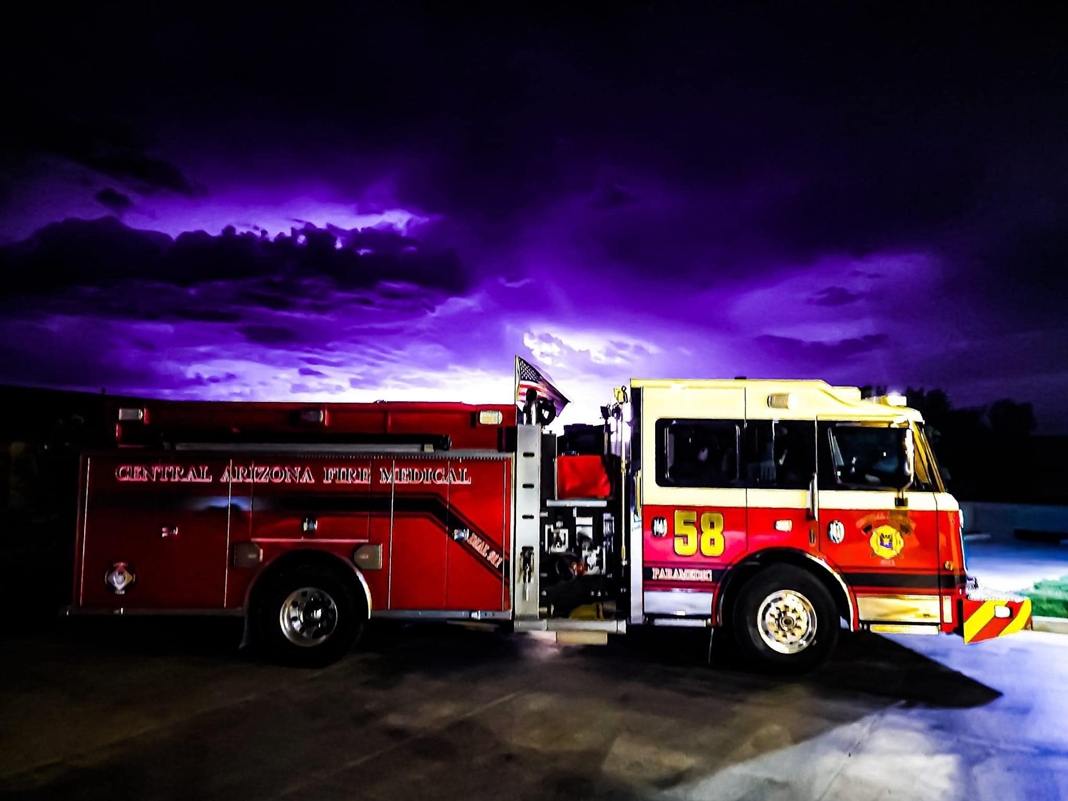
The Central Arizona Fire and Medical Authority (CAFMA) is urging community members to stay vigilant as monsoon season continues to bring unpredictable weather, including lightning. To help ensure your safety, CAFMA is sharing essential lightning safety tips and debunking common myths.
Lightning Safety Tips
- You are not safe outdoors when thunderstorms are in the area
- Always check the weather forecast before heading outside for recreational activities
- When thunder roars, go indoors! Safe shelters include sizable buildings with electricity and plumbing or metal-topped vehicles with the windows closed. Avoid using picnic area shelters, dugouts, and small buildings without plumbing or electricity, as they are not safe.
- Stay in a safe shelter at least 30 minutes after you hear the last sound of thunder
- If indoors, steer clear of windows and doors, and do not go out on the porch
- Refrain from using corded phones, computers, and any electrical equipment that could put you in direct contact with electricity
- Avoid using sinks, baths, and faucets as much as possible, as lightning can travel through metal plumbing and increase the risk of electric shock
Myth vs. Fact: Lightning
MYTH: You’re safe from lightning if there aren’t storm clouds directly overhead.
FACT: Lightning often strikes more than three miles from the center of a thunderstorm, and “bolts from the blue” (lightning from the back of a storm cloud) can travel 10 – 15 miles away from the storm. Always seek safe shelter immediately when you hear thunder.






MYTH: You should lie flat on the ground if you are stuck outside when a thunderstorm hits.
FACT: Lying flat increases the risk of being affected by dangerous ground currents that can cause injuries. Instead of lying down, keep moving quickly towards the nearest safe shelter.
MYTH: A lightning victim is electrified, and if you touch them, you’ll be electrocuted.
FACT: The human body doesn’t store electricity, so it is safe to provide first aid to a lightning victim. However, it is crucial to move yourself and the victim to a safe location as soon as possible.
CAFMA encourages all community members to familiarize themselves with these safety tips and to share them with family and friends. By staying informed and prepared, you can protect yourself and others during the stormy season.






“Children, especially, may not fully understand the dangers of playing outside during a thunderstorm,” said Kathy Goodman, CAFMA Community Relations Manager. “Make sure that your family talks about what to do before and during a storm and ensure that everyone knows how to stay safe and seek help if they need it.”
Additionally, CAFMA recommends that everyone be CPR and first aid certified, as these skills can be life-saving in emergencies, including those involving lightning strikes. Visit https://www.cazfire.gov for Heartsaver CPR, First Aid, and AED and BLS/Healthcare Provider CPR class information.
For more information on lightning safety and other weather-related precautions, please visit the National Weather Service website at www.weather.gov/safety.