




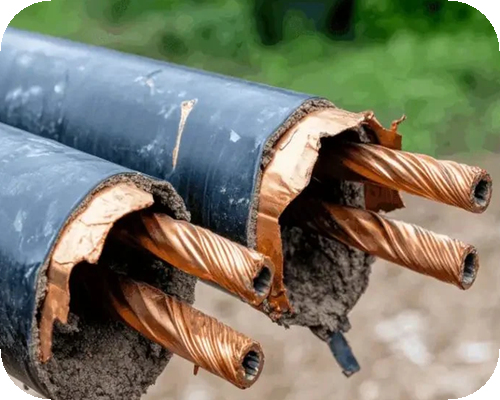
Photo courtesy of AT&T
For more than a century, America’s home telephone network literally ran on copper — reliable but limited. As consumers moved beyond voice calls, they demanded data services, fiber, cable, wireless and satellite networks that replaced copper. Yet, some regulators still force providers to maintain obsolete copper systems, driving needless costs and inviting theft and vandalism. Those mandates should go — and can do so without compromising access to fully capable alternatives.
Consumers have largely left copper behind. Voice, video and data now travel over newer networks. The numbers are stark: the FCC’s dated 2025 Voice Telephone Services Report found that just 15 million connections — 3.17 percent of the total — still used older technologies, likely including copper.
The Copper Retirement Bulletin shows copper use dropping nearly 20 percent a year. Government surveys from two years ago found that 78.7 percent of adults and 86.9 percent of children lived in wireless-only households. The world has moved on. Regulation needs to follow suit.
The Federal Communications Commission gets it. During my tenure there, the commission created a fair test that let providers shed needless copper rules where adequate alternatives existed. Last year, it expanded that framework to reflect America’s embrace of wireless and recently adopted, on a bipartisan basis, the details of faster relief, including adequate consumer notifications. The result is a sensible path to invest in modern networks instead of propping up dying copper ones.





Critically, this approach will not strand the few remaining copper customers — and no one wants it to. Families, especially older consumers who prefer familiar landline phones, will not be cut off. Copper relief applies only where viable alternatives exist, and providers are deploying technologies that leverage modern networks to deliver that conventional landline home-phone feel. That may delay copper’s final shutdown, but providers broadly agree on protecting current customers. Copper network-dependent industries, including alarm companies, must modernize too — and they are. The technology exists, and companies have been migrating customers for years.
Likewise, 9-1-1 systems are upgrading to next-generation technologies and will continue to do so, ensuring every family can reach emergency services and the personnel they need in times of crisis. Given the sensitive activities involved, the FCC specified appropriate protections, which providers have supported, before retiring any copper to prevent network disruption to 9-1-1 and to ensure any consumer alternative technologies prevent loss of access. This combination of seamlessly migrating 9-1-1 networks to new technology and protecting these services during copper retirements mitigates any potential effect.
Because state and federal agencies share jurisdiction over copper networks, meaningful relief may also require state approval. Several states have embraced the future and led new network investment; a select few have allowed nostalgia and backward thinking to rule. Most, however, are reviewing applications or will soon receive them.
In those proceedings, logic and thoughtfulness need to prevail. State regulators must decide whether to force providers to keep diverting workforce and money to patching frail systems when consumers have more sustainable alternatives.
Beyond the massive cost, which stretches into the tens of billions to maintain copper voice, providers increasingly struggle to find and install replacement parts. That’s not a network built for the 21st century, capable of withstanding ever-present physical and cyber-attacks.





Part of these state deliberations must focus on determining a proper end goal. The FCC has set a national priority to sunset copper networks, following Europe’s traditionally cautious lead. In doing so, it has also signaled that it has legal tools available to push intractable state regulators forward.
The reality is simple: copper networks are not coming back, for better or worse. For applicable consumers, concrete evidence shows no harm and continuity of service where it’s been done. This is not a theoretical effort. Indeed, at least 21 states have approved providers’ copper retirement efforts in some areas. That still leaves a large swath of territory within states, and in non-approved states, for consideration.
The problem isn’t just rooted in cost and future investment. As FCC Commissioner Olivia Trusty has highlighted, copper networks also serve as magnets for thieves and create real network exposures. Criminals cut all cables — even fiber — hoping to extract copper scrap for resale, knocking out service to homes, businesses, government users and emergency systems. Providers then must dispatch crews to reconnect affected customers. It’s costly, time-consuming and detrimental to users. By sunsetting copper networks, even the dumbest criminals will move on when no copper is available.
Copper networks served America well, but that era is ending. Regulators should not prop up aging infrastructure when better, safer and more resilient options exist. With proper notice, reliable alternatives, and reasonable protections for the few remaining users, policymakers can retire copper responsibly and redirect scarce resources toward the networks Americans actually use and need. State officials can align with this reality, allowing consumers to benefit from stronger communications systems built for the future — not preserved for the past.



Michael O’Rielly | INSIDE SOURCES
Recent Articles
November Voter Publicity Pamphlet has Error in it
CAFMA and Prescott Fire Department Invite Community to Help Shape Wildfire Protection Plan
City of Prescott Invites Community Members to Learn More About Long-Term Water Management Plan
October Gardening Classes Every Saturday at Watters Garden Center