

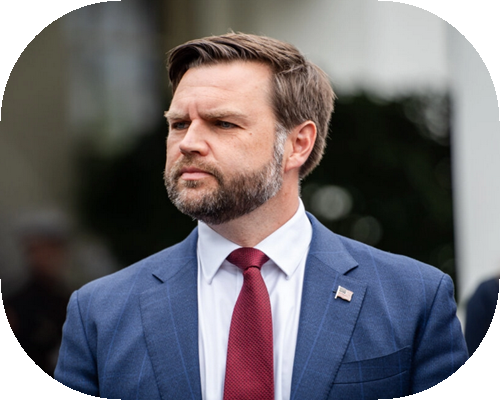
“If I was in the Cabinet of the Israeli government, I might not be attacking the only powerful ally that I have anywhere left in the entire world,” said Vice President JD Vance in response to Israeli criticism of the new peace agreement with Iran.
Israeli critics contend that the agreement leaves key concerns unresolved, including Iran’s future nuclear capabilities, ballistic missile program, regional proxy network, and the possibility of sanctions relief that could help Tehran rebuild its strength.
Vance’s unusually blunt statement suggests that the political cost of criticizing Israel publicly has suddenly dropped. This is unprecedented.
For decades, disagreements between Washington and Jerusalem followed a familiar pattern. American presidents occasionally pressured Israeli prime ministers; Israeli leaders occasionally resisted. Most disputes, however, were managed behind closed doors. What made Vance’s remark noteworthy was not the disagreement itself but the willingness of a senior official to express it so publicly.
That pattern appears to be changing.





Over the past year, the United States has increasingly defined the boundaries of acceptable Israeli action on some of the most important security issues facing the country. Gaza, Iran, and now the debate surrounding the new agreement with Tehran all point in the same direction.
The trend first became visible during the Gaza war. The ceasefire and hostage arrangements were among the most consequential developments of the conflict, yet they were shaped primarily in Washington rather than Jerusalem. Many Israelis welcomed the results, but the episode also highlighted an uncomfortable reality about where ultimate leverage resided.
The same dynamic emerged in relation to Iran. Prime Minister Benjamin Netanyahu spent years warning that Iran represented the greatest threat to Israel’s security and pressed successive American administrations to adopt a harder line toward Tehran. He also persuaded Trump to join Israel’s military campaign against Iran.
Many Americans have concluded that Israel helped draw the United States into another Middle Eastern war. In their view, Washington was not restraining Israel but following its lead.
Yet, the aftermath told a different story: Once the United States entered the conflict, it also determined how it would end. The Trump administration publicly discouraged certain Israeli responses, set limits on escalation, negotiated directly with Tehran, and ultimately set the framework of the new agreement.






That is the central irony of the moment. Netanyahu may have succeeded in persuading Trump to join the war, but he did not gain control over American policy. On the contrary, by making Israel’s campaign dependent on American military, diplomatic and political support, he increased Washington’s leverage over Israel’s choices.
Vance underscored that reality when he defended the president’s approach by declaring, “Israel may like that, they may not like that. But fundamentally, we think this is in the best interest of the United States of America.”
This new approach extends beyond the Iran agreement itself. Disputes between Washington and Jerusalem are nothing new. Dwight Eisenhower forced Israel to withdraw from Sinai in 1957. George H.W. Bush confronted Yitzhak Shamir over loan guarantees in 1991. Barack Obama clashed repeatedly with Netanyahu over Iran and the Palestinians. Even during those confrontations, American leaders generally avoided publicly framing the relationship in terms of diverging national interests.
Vance’s remarks suggest a greater willingness to acknowledge openly what policymakers have long understood privately: allies can share broad strategic goals while disagreeing sharply on how to achieve them.
The shift is particularly notable because it is emerging from within a Republican administration widely viewed as exceptionally supportive of Israel. Support no longer necessarily means granting Israel a veto over American policy.
This evolution raises difficult questions for Israel. For decades, many Israelis thought that — despite their country’s heavy dependence on American military, diplomatic and economic support — final strategic decisions remained firmly in Israeli hands. Today, that assumption is becoming harder to sustain.
Israel’s growing dependence is not the result of a single decision. It is the cumulative product of years in which military power increasingly substituted for diplomacy and tactical success increasingly replaced long-term strategy.
Successive Israeli governments, and especially Netanyahu’s, invested heavily in military solutions while offering little political vision for Gaza, the Palestinians, or the broader region.


The irony is difficult to ignore. Netanyahu built much of his political career on promises of sovereignty, security and strategic independence. Yet the cumulative effect of recent policies may have been to deepen Israel’s reliance on Washington precisely at the moment when Washington has become more willing to exercise its leverage openly.
The most important question raised by the Iran agreement is not whether it succeeds or fails. Agreements come and go. Administrations change. The larger issue is whether recent events mark the beginning of a new phase in the U.S.-Israel relationship, one in which American leaders feel increasingly comfortable drawing Israel’s red lines in public rather than negotiating them in private.
If so, the debate over the future of the alliance has only just begun.