
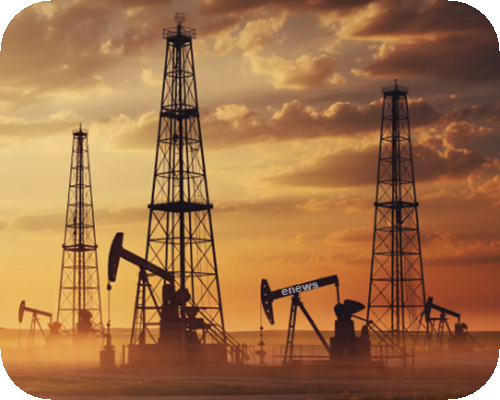
When North Dakota State Geologist Wilson Laird announced a successful oil strike near Tioga in 1951, it marked the beginning of an industry that reshaped the state’s economy, politics and identity. Seventy-five years later, North Dakota pumps out an estimated 1.1 million barrels per day and remains a major force in America’s energy sector.
The Rough Rider State was mostly known for farming and railroads before the oil industry boomed. Speculators had been searching for oil since the early 1900s but fell short because of funding issues and technological limitations.
In a later interview with the North Dakota Geological Survey, Laird said it was disappointing those early developers didn’t live long enough to see the oil sector’s growth.
“I doubt if they could visualize the impact the discovery of oil would have,” he said.
The North Dakota oil industry followed national trends, with reduced activity in the Williston Basin during the 1960s, followed by a second boom in the late ’70s and early ’80s.





Production slowed during the 1990s as producers experimented with horizontal drilling in the Bakken Formation in Tioga. While the wells yielded oil, they were ultimately shut down due to drilling and completion costs. At the turn of the century, it seemed North Dakota was prepared to produce less than 32 million barrels per year.
But the industry’s fortunes changed in the mid-to-late 2000s when energy companies combined horizontal drilling with fracking.
“It was the first unconventional oil play, and it started the shale revolution in the U.S. for oil,” said Trisha Curtis, an oil and gas senior consultant with the U.S. Energy Department.
Fracking helped North Dakota avoid major economic damage from the global financial crisis of the late 2000s, according to Ron Ness, president and CEO of the North Dakota Petroleum Council.
Oil production skyrocketed as investment brought in new technology, eventually helping make North Dakota the nation’s third-largest oil producer. The industry generates tens of billions of dollars annually and supports tens of thousands of jobs in the state.






“We didn’t invent hydraulic fracturing and horizontal drilling,” Gov. Kelly Armstrong told InsideSources, “but they were perfected here.”
It also brought in more residents. U.S. Census Bureau data show the state has grown almost 19 percent since 2010, with population increases every year except 2021.
The rapid growth also brought political conflict.
Protests broke out in 2016 as construction began on the Dakota Access Pipeline. Five construction sites on the $3.8 billion pipeline were temporarily shut down, and demonstrators disrupted a gubernatorial debate. The pipeline was eventually completed in 2017, transporting 570,000 barrels per day to refineries in Illinois and the Gulf Coast.
Ness said the anger has dissipated because the Three Affiliated Tribes of North Dakota realize the pipeline’s benefits.
“They’ve done a great job of going from a tribal nation that had extreme poverty and unemployment to one of tremendous wealth, and they’ve been using their resources to build schools,” he told InsideSources.
The oil boom did more than reshape North Dakota’s economy and population. It also transformed the state’s finances.
“Oil and gas accounts for over 52 percent of all revenues the North Dakota government takes in,” Ness said.


Armstrong said the state has used tax revenue to invest in hospitals, schools and water projects.
In 2010, residents approved the North Dakota Legacy Fund initiative, a state investment fund inspired in part by Norway’s sovereign wealth fund. A study group organized by the Great Plains Institute examined how Norway managed its oil wealth for the future.
The fund receives 30 percent of North Dakota’s oil and gas production and extraction tax revenue each month. It is designed to protect a portion of oil and gas revenue and grow it for the future.
Seventy-five years after the Tioga discovery, North Dakota is deeply tied to the oil industry, having gone from a mostly agricultural economy into an energy powerhouse.
“It’s going to take a next-level technology, which nobody in the world has figured out yet, but we think North Dakota is poised to make that happen,” Ness said.