



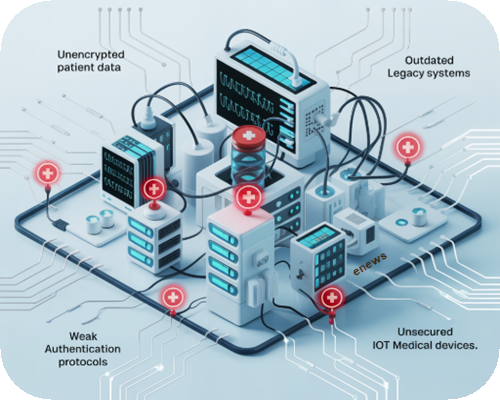
Healthcare organizations have many digital systems that need to work together to ensure the right systems have the correct patient information at the right time. While technology enhances process efficiency, it also introduces a range of security risks that organizations must address. Regular penetration testing can help identify vulnerabilities before an attacker can exploit them.
Weak Authentication Protocols
Most penetration testing for healthcare relies on a username and a password. This is a simple method that frequently fails to provide a defense against an onslaught. For many companies, weak password policies and a lack of multifactor authentication offer entry points for cybercriminals. Such shortcomings enable unauthorized users to sneak through the healthcare system to gain access to sensitive patient data with little resistance.
Outdated Software and Operating Systems
Legacy systems are widespread in healthcare environments. Oftentimes, these platforms no longer receive timely security updates and patches. Because these parts are antiquated, cyber attackers target them, armed with knowledge of existing gaps in your system. While patched systems pose a lower risk, unpatched systems are easier opportunities for attackers interested in exfiltrating PHI.
Poor Access Controls
In some healthcare settings, staff have access to more than they need. Weak restrictions allow internal adversaries easier access to data for misuse. Giving two broad permissions increases the possibility of unintended behavior and intentional information leakage. One of the most effective approaches to mitigate this risk is to grant access based on job tasks.
Unprotected Medical Devices
Infusion pumps, imaging equipment, and other hospital devices have also become more connected. Many of these tools do not have an inbuilt security feature. These devices, therefore, can serve as a gateway for attackers who exploit weak or default passwords to gain entry. Hardware in the system (such as a radiator) can disrupt patient care and provide attackers with a foothold for additional attacks on the hospital network.






Mis-configured Cloud Storage
The cloud-based platform provides a larger, scalable field for health care providers. On the other hand, configuration mistakes can expose sensitive files to unauthorized users. Cloud storage buckets are one of the most commonly identified security issues during the assessment phase. Having the correct privacy settings in place can help protect against this threat.
Insufficient Employee Training
Medical data breaches are still primarily because of human error. Staff might click on malicious links or unknowingly share passwords. In the absence of regular security awareness training, employees may not even identify familiar cyber threats. It keeps the staff informed of what suspicious activity actually looks like and strengthens the security.
Third-Party Vendor Risks
Healthcare organizations frequently use other vendors for specific areas of expertise. Hidden vulnerabilities arise from vendors with poor security practices. Therefore, attackers often target these partners as potential entry points into hospital networks. Protecting patient information means evaluating third-party security data and the ecosystem.
Lack of Regular Security Assessments
Some organizations never test their defenses after initial implementation. But as the threat develops, systems that may have once appeared very secure can become vulnerable. Conducting regular penetration tests can help catch new vulnerabilities as they emerge and ensure ongoing protection over time. Regular reviews are critical for any security program.
Excessive Data Storage
Hospitals frequently hold on to enormous piles of patient data, often well beyond what regulations require. Large data stores are interesting targets for hackers. Regularly checking and removing unnecessary records can reduce the risk and lessen the damage if a breach happens.






Weak Physical Security Measures
Creating sound digital systems tends to take precedence over physical security. However, unmonitored server rooms leave workstations vulnerable to much worse breaches. Keeping hardware secure is simple: lock cabinets, ensure that only authorized personnel have access, and install CCTV cameras, to name a few basic steps.
Insecure Mobile Devices
Doctors and nurses abuse smartphones for consulting patient records. These portable devices are susceptible to loss or theft, which could potentially expose sensitive data. Device encryption and strong authentication safeguard sensitive information from malicious use in the event of a lost mobile tool.
Conclusion
Penetration testing remains a valuable method for uncovering hidden flaws in medical infrastructure. By addressing common vulnerabilities, healthcare organizations protect patient data and trust. A firm foundation—updating software, restricting access, training employees—will be safer for everyone. Frequent reassessment and enhancement of defenses to harden against newer and emerging threats as they develop.